
Netsuke
Unknown Artist
19th century
Medium
Ivory
Dimensions
H. 1 in. (2.5 cm); W. 2 in. (5.1 cm)
Classification
Netsuke
Culture & Period
Japan · Edo (1615–1868) or Meiji period (1868–1912)
Department
Asian Art
Museum
Metropolitan Museum of Art, New York, NY
Credit
Gift of Mrs. Russell Sage, 1910
Accession Number
10.211.396
Rights
Public Domain
Tags
Art Historical Context
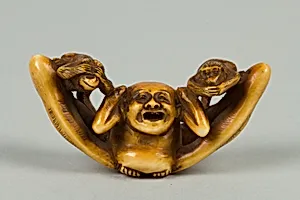
This exquisite ivory netsuke, carved in 19th-century Japan the late Edo (161–1868) or Meiji (18681912) period, a lively scene of men interacting with monkeys. Measuring just 1 inch high and 2 inches, its diminutive scale belies the intricate craftsmanship typical of these functional toggles. Netsuke were essential accessories in traditional Japanese dress, securing inro pouches—small lacquered boxes for medicines or seals—to silk belts (obi), as kimonos lacked pockets. Carved from ivory, the medium allowed artisans to achieve remarkable detail in fur textures, expressive faces, and dynamic poses, showcasing the virtuoso techniques of netsuke sculptors. Often depicting everyday life, folklore, or humor, this piece's men-and-monkeys motif evokes playful tales from Japanese culture, where monkeys symbolize mischief and cleverness, sometimes as companions to humans. By the 19th century, netsuke had evolved from utilitarian objects into coveted art forms, collected by samurai and merchants alike. A gift to the Metropolitan Museum of Art from Mrs. Russell Sage in 1910, this anonymous masterpiece highlights Japan's rich tradition of miniature sculpture, blending utility, whimsy, and technical brilliance for everyday elegance.