
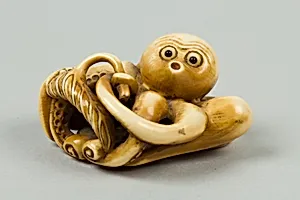
Netsuke of Octopus
Unknown Artist
19th century
Medium
Ivory
Dimensions
H. 1 in. (2.5 cm); W. 1 1/2 in. (3.8 cm); D. 1 1/4 in. (3.2 cm)
Classification
Netsuke
Culture & Period
Japan · Edo (1615–1868) or Meiji period (1868–1912)
Department
Asian Art
Museum
Metropolitan Museum of Art, New York, NY
Credit
Edward C. Moore Collection, Bequest of Edward C. Moore, 1891
Accession Number
91.1.966
Rights
Public Domain
Tags
Art Historical Context
This delightful *Netsuke of Oct*, carved from ivory in 19th-century Japan during the late Edo (1615–1868) or early Me (1868–1912) period, exemplifies the exquisite craftsmanship of these miniature toggles. Measuring just 1 inch high, netsuke served a practical purpose: as decorative fasteners securing inro pouches—smallquered boxes for medicines or tobacco—to a kimono sash. Their diminutive size demanded masterful carving techniques, with artisans shaping dense ivory into intricate forms through meticulous incising and polishing to capture lifelike textures, like the octopus's sinuous tentacles. In Japanese culture, netsuke were more than utilitarian; they were wearable art, often depicting animals symbolizing good fortune or natural wonders. The octopus, or *tako*, evokes the sea's mysteries, a staple in Edo-period life and folklore, where it represented adaptability and intelligence. This piece highlights the period's artistic zenith, blending functionality with whimsy in Asian Art traditions. Now part of the Metropolitan Museum of Art's Edward C. Moore Collection (bequest of 1891), it invites visitors to marvel at Japan's portable sculptures—tiny portals to a vibrant past.