
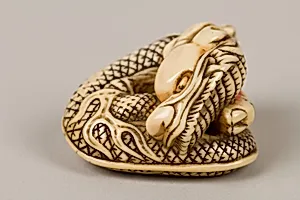
Netsuke of Coiled Dragon Enclosing a Pearl
Unknown Artist
late 18th century
Medium
Ivory
Dimensions
H. 1 3/4 in. (4.4 cm); W. 1 1/2 in. (3.8 cm)
Classification
Netsuke
Culture
Japan
Department
Asian Art
Museum
Metropolitan Museum of Art, New York, NY
Credit
Gift of Alvin H. Schechter, 1985
Accession Number
1985.399.2
Rights
Public Domain
Tags
Art Historical Context
This exquisite netsuke, carved from ivory in late 18th Japan, depicts a coiled dragon fiercely guarding a luminous pearl. Measuring just 1 3/4 inches high and 1 1/2 inches wide, compact form belies the intricate craftsmanship typical of Edo-period decorative arts. Now housed in the Metropolitan Museum of Art Asian Art Department as a gift from Alvin H Schechter in 198, it exemplifies the mastery of anonymous Japanese artisans who transformed small-scale sculpture into wearable treasures. Netsuke were essential accessories in traditional Japanese dress, serving as toggles to secure inro pouches to kimono sashes. Fashioned from ivory—a prized medium for its smooth carvability and luminous quality— this piece showcases fine detailing in the dragon's scales, claws, and sinuous body. Dragons held profound cultural symbolism in Japan, embodying imperial power, wisdom, and control over water and storms, while the enclosed pearl evokes the mythical jewel of enlightenment or divine treasure. Visitors will appreciate how such miniature marvels highlight Japan's blend of functionality and fantasy, reflecting a golden age of artisanal skill before netsuke became coveted collector's items worldwide.