
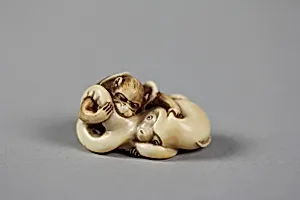
Netsuke of Octopus Fighting a Monkey
Unknown Artist
19th century
Medium
Ivory
Dimensions
H. 3/4 in. (1.9 cm); W. 1 1/2 in. (3.8 cm); D. 1 in. (2.5 cm)
Classification
Netsuke
Culture & Period
Japan · Edo (1615–1868) or Meiji period (1868–1912)
Department
Asian Art
Museum
Metropolitan Museum of Art, New York, NY
Credit
Edward C. Moore Collection, Bequest of Edward C. Moore, 1891
Accession Number
91.1.962
Rights
Public Domain
Tags
Art Historical Context
Nestled in the Metropolitan Museum of Art's Art collection, this exquisite netsuke depicts an octopus locked in a whimsical battle with a monkey. Carved from ivory in the 19th century during Japan's Edo (1615–1868) or early Meiji (1868–1912) period, it measures just 3/4 inch high, 1 1/2 inches wide, 1 inch deep—perfectly sized for its practical role as a toggle. Netsuke like this secured inro (small medicine or tobacco pouches) to a wearer's kimono sash, evolving from functional objects into coveted miniature sculptures prized for their ingenuity and charm. The dynamic scene captures the octopus's tentacles wrapping around the agile monkey, showcasing the carver's mastery of ivory. This dense, smooth material allowed for intricate details, from the creature's suction cups to the monkey's expressive face and fur texture, all rendered in a compact form. Such fantastical motifs drew from folklore and everyday humor, blending nature's oddities with playful narrative to delight collectors. A gift from the Edward C. Moore Collection (bequest 1891), this piece highlights netsuke's cultural zenith, when Japanese artisans elevated everyday accessories into wearable art, bridging utility and fantasy in Edo-Meiji Japan. Hold it in your palm and feel the lively spirit of a bygone era!