
Norris
1892
Medium
Drawing
Classification
Drawing
Department
Smithsonian Collection
Museum
Smithsonian American Art Museum
Credit
Smithsonian American Art Museum, Gift of Dr. William Henry Holmes
Accession Number
1947.13.19
Rights
Public Domain
Tags
Art Historical Context
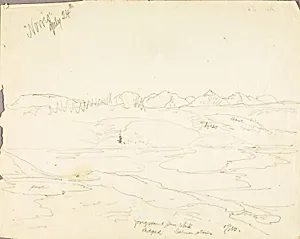
**Norris** by Thomas Moran (1892) captures the dramatic geothermal wonders of Yellowstone National Park's Norris Geyser Basin in's Rocky Mountains. This intricate drawing showcases Moran's masterful ability to render the raw power of nature, with steaming vents and bubbling pools evoking the sublime beauty of America's untamed West. As a pioneering landscape artist associated with the Hudson River School andism, Moran was renowned for his luminous depictions of vast wilderness, often using sketches like this as studies for larger oil paintings. Created two decades after Yellowstone became the world's first national park in 1872—a designation Moran helped champion through his vivid expedition artwork—this piece reflects his lifelong passion for the region. He made multiple trips to document its geysers and canyons, influencing public appreciation and conservation efforts. Housed in the Smithsonian American Art Museum thanks to a gift from Dr. William Henry Holmes, the drawing highlights the preparatory precision of Moran's graphite or watercolor techniques on paper, emphasizing light, texture, and atmospheric depth. Visitors to our virtual gallery will appreciate how **Norris** bridges 19th-century exploration with enduring environmental awe, inviting reflection on nature's enduring majesty. (198 words)
About the Artist
Thomas Moran · 1837–1926
Thomas Moran (1837–1926) was an American painter and printmaker of the Hudson River School whose dramatic paintings of the American West played a pivotal role in the creation of the national parks. Born in Bolton, Lancashire, England, he emigrated with his family to Philadelphia as a child. He was largely self-taught, though he apprenticed briefly with a wood engraver and studied the work of J.M.W...