
Notes on the Indians
ca. 1832-1837
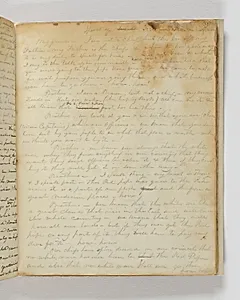
Medium
Graphic Arts-Book
Classification
Graphic Arts-Book
Department
Smithsonian Collection
Museum
Smithsonian American Art Museum
Credit
Smithsonian American Art Museum, Museum purchase
Accession Number
1971.261
Rights
Public Domain
Art Historical Context
**Notes on the Indians** by George Catlin (ca. 1832–1837) offers a vivid window into 19th-century America through the eyes of one of its pioneering artists. Catlin, a self-ta painter and ethnographer, embarked on extensive travels across the Great Plains during the 1830s, documenting Native American tribes at a pivotal moment. This graphic arts book, housed in the Smithsonian American Art, captures his firsthand observations with sketches, notes, and illustrations—likely drawn from his "Indian Gallery," a traveling collection of over 600 portraits and scenes. Historically, the work reflects the era's tensions: U.S. westward expansion and policies like the Indian Removal Act threatened indigenous cultures. Catlin's realist style, rooted in Romanticism, aimed to preserve these vanishing traditions through detailed, empathetic depictions of daily life, rituals, and portraits. As a book medium, it democratized access to his art via affordable engravings, influencing public perceptions and inspiring later anthropologists. Today, *Notes on the Indians* stands as a cultural touchstone, blending art and advocacy. Though tinged by 19th-century biases, Catlin's passion underscores the power of visual storytelling to honor diverse heritages. (198 words)
About the Artist
George Catlin · 1796–1872
George Catlin (1796–1872), born in Wilkes-Barre, Pennsylvania, to Putnam Catlin and Polly Sutton—who had been captured by Native Americans during the 1778 Battle of Wyoming—initially pursued a legal career. Trained at Litchfield Law School, he was admitted to the bar in 1819 but abandoned law after two years to study art in Philadelphia in 1823. Self-taught as a portraitist, Catlin quickly gained ...