
Nutmeg Grater
Unknown Artist
1775–ca. 1800
Medium
Silver and steel
Dimensions
3 1/8 x 1 7/16 x 1 1/8 in. (7.9 x 3.7 x 2.9 cm); 1 oz. 11 dwt. (48.7 g)
Classification
Nutmeg Grater
Culture
American
Department
The American Wing
Museum
Metropolitan Museum of Art, New York, NY
Credit
Bequest of Alphonso T. Clearwater, 1933
Accession Number
33.120.241
Rights
Public Domain
Art Historical Context
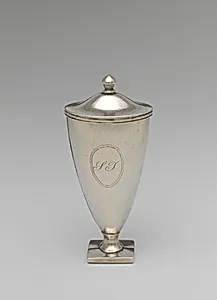
This exquisite nutmeg grater, crafted in silver and steel between 1775 and around 1800, exemplifies refined craftsmanship of early American silversmiths. Measuring just over three inches long and weighing under two ounces, its compact, pocket-sized design made it a practical accessory for gentlemen travelers or hosts. The gleaming silver body, paired with a functional grating surface, highlights the era's of utility and elegance—silver's luster signaling status while ensuring durability for daily use. In late 18th-century America nutmeg was a prized luxury spice imported from the East Indies, essential for flavoring punches, eggnog, and baked goods among the affluent. Owning a personal grater like this one underscored social sophistication, as fresh grating preserved the spice's potent aroma far better than pre-ground versions. Housed in The Metropolitan Museum of Art American Wing, this piece from an unknown artisan reflects the burgeoning colonial metalworking tradition, where everyday objects became subtle expressions of taste and prosperity. Bequeathed by Alphonso T. Clearwater in 1933, it offers a tangible glimpse into Revolutionary-era domestic life, reminding us how even kitchen tools embodied cultural aspirations.