
Ochanomizu
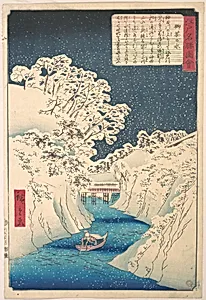
Medium
Woodblock print; ink and color on paper
Dimensions
H. 14 3/8 in. (36.5 cm); W. 9 1/2 in. (24.1 cm)
Classification
Prints
Culture & Period
Japan · Edo period (1615–1868)
Department
Asian Art
Museum
Metropolitan Museum of Art, New York, NY
Credit
Rogers Fund, 1919
Accession Number
JP1128
Rights
Public Domain
Tags
Art Historical Context
**Ochanomizu** by Utagawa Hirosh II captures a serene winter moment along the Kanda River in Edo-period Tokyo's Ochanomizu district. woodblock print depicts snow-dusted bridges arching gracefully over the icy waters, with small boats dotting the river below. The delicate layering of ink and color on paper evokes the hush of a snowy day, blending human activity with nature's quiet beauty—a hallmark of ukiyo-e landscapes. iroshige II, son and pupil of the renowned Hiroshige I, continued the Utagawa school's mastery of everyday scenes during Japan's Edo period (1615–1868). Ukiyo-e prints like this one democratized art, making vivid imagery accessible through affordable multiples. Produced via a collaborative woodblock process—design, carving, printing, and coloring—such works celebrated transient moments, from bustling urban life to seasonal changes. Measuring 14⅜ × 9½ inches, this print highlights the cultural fascination with snow as a poetic motif in Japanese art, symbolizing purity and impermanence. Acquired through the Rogers Fund in 1919, it now graces the Metropolitan Museum of Art's Asian Art collection, offering visitors a window into Edo Japan's harmonious blend of city and season.
About the Artist
Utagawa Hiroshige II · 1826–1869
Utagawa Hiroshige II, born Suzuki Chinpei in 1826, was one of the most accomplished ukiyo-e artists of mid-nineteenth century Japan. He entered the studio of the celebrated landscape master Utagawa Hiroshige I — known for his iconic series "The Fifty-three Stations of the Tokaido" — and proved himself the most talented of the elder artist's few students. So highly regarded was the young pupil that...