
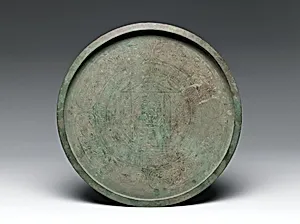
Offering Tray (Talam)
Unknown Artist
13th–14th century
Medium
Copper
Dimensions
Diam. 17 1/2 in. (44.5 cm)
Classification
Metalwork
Culture & Period
Indonesia (Java) · Eastern Javanese period
Department
Asian Art
Museum
Metropolitan Museum of Art, New York, NY
Credit
Samuel Eilenberg Collection, Gift of Samuel Eilenberg, 1996
Accession Number
1996.469
Rights
Public Domain
Art Historical Context
Nestled in the Metropolitan Museum of Art's Asian Art collection, this elegant copper Offering Tray, or *talam*, hails from Java, Indonesia, during the Eastern Javan period of the 13th–14th centuries. Measuring 17½ inches in diameter, it the refined metalwork of the Singhasari and early Majapahit eras, when Hindu-Buddhist kingdoms flourished on the island. These trays were essential ritual objects, used to present flowers, incense, food, and other offerings to deities, ancestors, or during temple ceremonies and royal processions. Crafted from copper—a durable and prestigious medium prized for its workability—the *talam* likely features repoussé or chased techniques, common in Javanese metalwork, to create intricate motifs symbolizing prosperity and the divine. Its circular form evokes cosmic harmony, reflecting the era's blend of Indian-influenced spirituality and local artistry. Such objects bridged the earthly and spiritual realms, underscoring Java's vibrant court culture and devotion. A gift from the Samuel Eilenberg Collection in 1996, this tray offers visitors a tangible link to medieval Java's opulent rituals, inviting reflection on how everyday metalwork embodied profound cultural reverence.