
Old Man with a Gold Chain
Medium
Oil on panel
Dimensions
83.1 × 75.7 cm (32 3/4 × 29 3/4 in.); Framed: 105.1 × 99.5 cm (41 3/8 × 39 3/16 in.)
Classification
oil on panel
Department
Painting and Sculpture of Europe
Museum
Art Institute of Chicago
Accession Number
95998
Rights
Public Domain
About this artwork
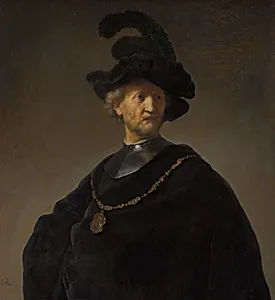
This compelling figure—fancifully adorned with a steel gorget (armor protecting the throat and upper chest), golden chain, and plumed beret—represents a new commodity on the Northern European art market: a tronie, or character study. While artists had created such studies since the 1500s, Rembrandt and his colleague Jan Lievens made these images into more affordable alternatives to portraits, heightening their appeal by introducing bold visual elements like dramatic lighting, whimsical costumes,...
Art Historical Context
In the hallowed halls of the Art Institute of's Painting and Sculpture of Europe department, Rembrandt van Rijn's *Old Man with a Gold* (1631) stands as a masterful early portrait. Painted in oil on panel—a durable medium favored by Dutch Golden Age artists for its smooth surface and fine detail—this 83.1 × 75.7 cm work captures an elderly man in opulent attire, adorned with a gleaming gold chain that evokes Renaissance grandeur. At just 25 years old, Rembrandt, already a prodigy from Leiden, demonstrated his precocious genius in this bust-length study. Rembrandt's Baroque style shines through in his revolutionary use of chiaroscuro, where dramatic contrasts of light and shadow sculpt the man's weathered face, conveying wisdom, introspection, and quiet dignity. The gold chain catches the light with luminous precision, highlighting Rembrandt's skill in rendering textures—from the satin sheen of fabric to the intricate links of jewelry. This technique not only adds realism but invites viewers to ponder the sitter's identity, possibly a prosperous merchant or even a character study (*tronie*), reflecting 17th-century Dutch fascination with status and character. A cornerstone of Rembrandt's early oeuvre, this painting foreshadows his lifelong mastery of psychological depth and emotional resonance, making it a must-see for understanding the roots of one of art history's greatest portraitists.
About the Artist
Rembrandt van Rijn · 1606–1669
Rembrandt Harmenszoon van Rijn (1606–1669) stands as one of the greatest visual artists in the history of Western art and the most important Dutch painter of the 17th century. Born in Leiden to a prosperous miller's family, Rembrandt transformed painting through his revolutionary use of light and shadow, his psychological depth in portraiture, and his elevation of etching to a fine art. His approx...