
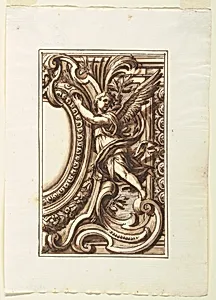
One of a set of twelve projects for the decoration of wall panels, to be placed at a height. Preceded by a title page (Wall Decoration: Angel and Escutcheon)
1675-1699
Classification
Drawing
Department
Smithsonian Collection
Museum
Smithsonian American Art Museum
Credit
Museum purchase through gift of various donors and from Eleanor G. Hewitt Fund
Accession Number
1938-88-2294
Rights
Public Domain
About this artwork
Research in Progress
Art Historical Context
Nestled in the Smithsonian American Art Museum's collection, this drawing is one of intricate projects designed for decorating wall panels positioned high above eye level. Created between 1675 and 1699, it forms part of a cohesive set, introduced by a title page featuring an "Angel and Escutcheon"—a heraldic shield often symbolizing lineage, protection, or divine favor. a preparatory drawing, it captures the meticulous planning behind opulent interior schemes of the late 17th century, when elaborate ornamentation transformed spaces in grand homes, churches, or public buildings. Though the artist remains unknown and research is ongoing, this work reflects the era's Baroque influences, emphasizing grandeur and symbolism in architectural embellishment. Wall panels elevated high would have drawn the eye upward, enhancing a sense of awe and verticality in rooms. The inclusion of angelic motifs and escutcheons points to a blend of spiritual and aristocratic themes, common in colonial American or European decorative arts during this period of expanding transatlantic trade and cultural exchange. Acquired through museum purchase with gifts from donors and the Eleanor G. Hewitt Fund, this piece invites us to ponder the unseen craftsmanship behind historic interiors. Its survival as a drawing underscores the value of such designs in preserving the artistic blueprints of a bygone age.
About the Artist
Unknown
The artist designated as "Unknown" in our virtual museum's collection exemplifies a poignant chapter in art history: creators whose identities have faded into obscurity despite the enduring power of their work. With only one known artwork attributed to them in our holdings, this figure represents countless anonymous hands that shaped visual culture across centuries. Museums worldwide, including th...