
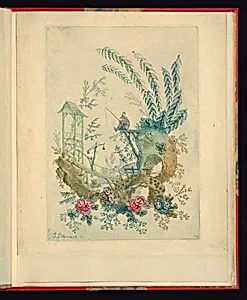
Ornamental Design from "Nouvelle suite de cahiers chinois a l'usage des dessinateurs et des peintres" No.3, Inventes et dessines par Jean Pillement. Graves par Anne Allen.
Medium
ornament
Classification
ornament
Department
Smithsonian Collection
Museum
Smithsonian American Art Museum
Credit
Purchased for the Museum by the Advisory Council
Accession Number
1921-41-30
Rights
Public Domain
About this artwork
Research in Progress
Art Historical Context
Step into the whimsical world of 18th chinoiserie with this *Ornamental Design* Jean-Baptiste Pillement'sNouvelle suite de cah chinois a l'usage des dessinate et des peintres* (New Suite of Chinese Notebooks for the Use of Designers and Painters No. 3. Created after 1775 by the French artist Pillement (1728–8), a master of rococo ornamentation, this piece was ingeniously drawn by him and meticulously engraved by Anne Allen. Pillement, celebrated for his intricate patterns blending European fantasy with imagined Chinese motifs, produced these designs as practical resources for fellow artists and decorators during Europe's Enlightenment-era obsession with the exotic East. Chinoiserie flourished in the late 1700s amid expanding global trade, adorning everything from porcelain to wallpapers in lavish interiors. Pillement's lively, asymmetrical compositions—filled with fantastical foliage, birds, and pagodas—exemplify the playful asymmetry of rococo while serving as versatile templates for textile and furniture makers. This engraving's portability made it a go-to tool for disseminating stylish motifs across workshops. Now treasured in the Smithsonian American Art Museum's collection, purchased by the Advisory Council, this ornament highlights the cross-cultural creativity of its time. Though research continues, it invites us to appreciate how Pillement's inventions bridged art and craft, sparking decorative revolutions. (198 words)