
Orphrey from a Chasuble
Unknown Artist
first half 17th century
Medium
Silk; metal; linen
Dimensions
40 1/8 x 10 3/4 in. (102 x 27.3 cm)
Classification
Textiles-Woven
Culture
Italian
Department
Robert Lehman Collection
Museum
Metropolitan Museum of Art, New York, NY
Credit
Robert Lehman Collection, 1975
Accession Number
1975.1.1769
Rights
Public Domain
Tags
Art Historical Context
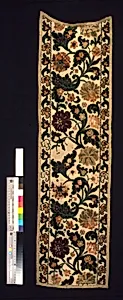
This exquisite orphrey, a richly embroidered vertical band from a chasuble—a sleeveless outer vestment worn by Catholic priests during Mass—hails from Italy in the first half of the17th century. During the Baroque era, such textiles adorned liturgical garments to symbolize divine splendor and ecclesiastical prestige, reflecting the Catholic Church's emphasis on opulent ritual amid the Counter-Reformation. Measuring over three feet long and nearly a foot wide, this piece would have cascaded down the front of the chasuble drawing the eye during ceremonies. Crafted from silk, metal threads (likely gold or silver for a shimmering effect), and linen, the orphrey exemplifies advanced woven textile techniques of Renaissance and Baroque Italy. Floral motifs, as suggested by its design, were popular in ecclesiastical embroidery, evoking paradise gardens and spiritual purity. The interplay of luxurious silk warps with metallic wefts created a durable yet dazzling surface, ideal for frequent liturgical use. Now in the Robert Lehman Collection at The Metropolitan Museum of Art, this anonymous masterpiece highlights Italy's mastery of ornamental weaving, bridging art, faith, and craftsmanship in 17th-century Europe. Visitors can appreciate how such textiles transformed sacred spaces into visual feasts of devotion.