
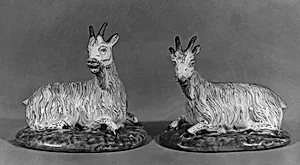
Pair of goats
Medium
Tin-glazed earthenware
Dimensions
each: 3 1/4 × 3 15/16 in. (8.3 × 10 cm)
Classification
Ceramics-Pottery
Culture
Dutch, Delft
Department
European Sculpture and Decorative Arts
Museum
Metropolitan Museum of Art, New York, NY
Credit
Gift of R. Thornton Wilson, 1969
Accession Number
69.215.1, .2
Rights
Public Domain
Tags
Art Historical Context
This charming *Pair ofats*, crafted by Anthoni P at the De Twee ScheepjesThe Two Little Ships) in Delft, Netherlands, dates to between 1759 and 1782. These petite tin-glazed earthenwareines, each measuring just 3¼ × 3⅞ inches (8.3 × 10 cm), exemplify the whimsical decorative arts of 18th-century Dutch ceramics. Produced during Delft's golden age of pottery-making, they were likely intended as delightful table or mantel ornaments, bringing a touch of pastoral charm to bourgeois homes. Delftware, as this medium is known, involved coating earthenware with a tin-oxide glaze that created a smooth, white surface ideal for vibrant painted decorations—often in blues, whites, and polychrome enamels. This technique, inspired by Chinese porcelain, allowed factories like De Twee Scheepjes to mass-produce affordable luxury items, blending functionality with artistry. Goats, a recurring motif in Delft ware, evoked rural life and abundance, reflecting the Netherlands' agrarian heritage amid its urban prosperity. Today, these goats grace the Metropolitan Museum of Art's European Sculpture and Decorative Arts collection, a gift of R. Thornton Wilson in 1969. They offer a window into Delft's innovative ceramic industry, which rivaled finer porcelains while celebrating everyday joys. Visitors, take a closer look at their expressive forms and glossy sheen—a testament to enduring Dutch craftsmanship!