
Pair of Lappets (Joined)
1760s
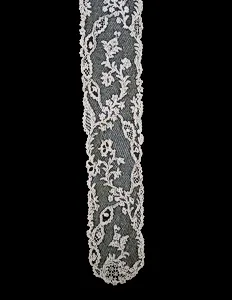
Medium
Linen, needle lace of a type known as "Point d'Argentan" with buttonholed mesh ground
Dimensions
136.2 × 9.3 cm (53 5/8 × 3 5/8 in.)
Classification
costume accessory
Department
Textiles
Museum
Art Institute of Chicago
Accession Number
111194
Rights
Public Domain
Art Historical Context
This exquisite pair of joined lappets, crafted in the 1760s, exemplifies the opulent lacework of 18th-century. Measuring over 53 inches long and 3.5 inches wide, these slender linen streamers were designed as costume accessories—likely dangling gracefully from a woman's elaborate headdress, such as a fontange or commode. Worn by the elite during the Rococo era, lappets added a touch of fluttering elegance to formal attire, signaling wealth and refined taste amid the lavish courts of France and beyond. Made using the prestigious "Point d'Argentan" needle lace technique from Normandy, these pieces feature a buttonholed mesh ground, where artisans meticulously buttonholed threads to create a durable, gossamer-like foundation. This labor-intensive method allowed for intricate, flowing patterns that mimicked the era's love of asymmetry and natural motifs, rivaling the finer Point d'Alençon lace. Each stitch reflects the skill of anonymous lacemakers, whose work could take months and was prized as a status symbol. Housed in the Art Institute of Chicago's Textiles Department, this rare survivor offers a glimpse into the artistry of fashion's unsung heroes. It reminds us how textiles like these bridged craftsmanship and culture, adorning the nobility while preserving techniques that influenced global lace traditions.
About the Artist
Unknown
The artist designated as "Unknown" in our virtual museum's collection exemplifies a poignant chapter in art history: creators whose identities have faded into obscurity despite the enduring power of their work. With only one known artwork attributed to them in our holdings, this figure represents countless anonymous hands that shaped visual culture across centuries. Museums worldwide, including th...