
Pair of small vases
1770–80
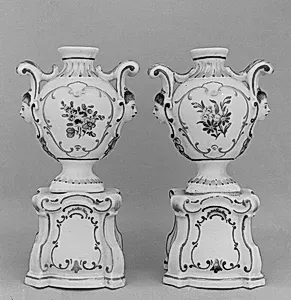
Medium
Hard-paste porcelain
Dimensions
Height (each): 4 1/2 in. (11.4 cm)
Classification
Ceramics-Porcelain
Culture
Italian, Florence
Department
European Sculpture and Decorative Arts
Museum
Metropolitan Museum of Art, New York, NY
Credit
Rogers Fund, 1906
Accession Number
06.395a, b
Rights
Public Domain
Tags
Art Historical Context
These charming small vases, crafted between 1770 and 1780 by the Doccia Porcelain Manufactory in Florence, exemplify the refined elegance of late eighteenth-century Italian ceramics. Standing just 4½ inches tall, each piece is made of hard-paste porcelain, a durable material achieved through high-temperature firing of kaolin and other minerals. This technique allowed for delicate yet sturdy forms that could capture intricate details, making them ideal for intimate decorative use in aristocratic homes. The Doccia factory, established in 1735 by Carlo Ginori, played a vital role in bringing European porcelain production to Italy, competing with leading centers like Meissen and Sèvres. These vases likely feature floral motifs, a popular decorative choice that reflected the era’s fascination with nature and botanical illustration. Their modest scale suggests they may have adorned tabletops, shelves, or formed part of a larger garniture set. Today in the Metropolitan Museum of Art’s collection, they offer visitors a glimpse into Florence’s artistic heritage and the technical mastery of Italian porcelain makers during a period when such luxury objects symbolized taste and refinement.
About the Artist
Doccia Porcelain Manufactory · 1737–1896
The Doccia Porcelain Manufactory, founded in 1737 by Marquis Carlo Ginori near Florence, holds the distinction of being Italy's first hard-paste porcelain manufacturer and one of the few European porcelain enterprises to survive from the eighteenth century to the present day without interruption. Unlike most contemporary ventures — which depended on the patronage and protection of ruling courts — ...