
Palampore
18th century
Classification
printed, dyed & painted textiles
Department
Smithsonian Collection
Museum
Smithsonian American Art Museum
Credit
Museum purchase from Au Panier Fleuri Fund
Accession Number
1959-146-1
Rights
Public Domain
About this artwork
Research in Progress
Art Historical Context
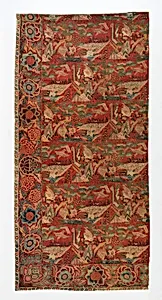
**Palampore** *Unknown artist, 18th* Printed, dyed & painted textile Smithsonian American Art Museum Step into the vibrant world of 18th-century textiles with this striking *Palampore*, a example of handcrafted Indian export art. Originating from the Coromandel Coast workshops, palampores were luxurious cotton bedcovers or wall hangings prized by European and American elites. Their bold floral motifs—often featuring stylized trees of life, peacocks, and paisley patterns—reflected Mughal influences blended with global trade demands, making them a bridge between Eastern craftsmanship and Western interiors. Crafted through meticulous block-printing, resist-dyeing, and hand-painting techniques on fine cotton, this piece showcases the ingenuity of artisans who used natural mordants and vegetable dyes for enduring colors. In colonial America, palampores adorned elite homes, symbolizing wealth and exotic taste amid the era's expanding trade networks. Acquired through the Museum's Au Panier Fleuri Fund, it highlights the Smithsonian's commitment to preserving these cultural artifacts. Though research continues, this *Palampore* invites us to appreciate the artistry of anonymous makers whose work wove global stories into everyday luxury. (178 words)
About the Artist
Unknown
The artist designated as "Unknown" in our virtual museum's collection exemplifies a poignant chapter in art history: creators whose identities have faded into obscurity despite the enduring power of their work. With only one known artwork attributed to them in our holdings, this figure represents countless anonymous hands that shaped visual culture across centuries. Museums worldwide, including th...