
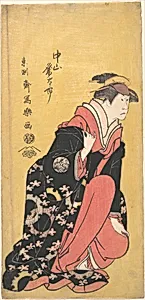
The Actor Nakayama Kumetaro II
1794
Medium
Left-hand sheet of a triptych of woodblock prints; ink and color on paper
Dimensions
12 3/4 x 5 31/32 in. (32.4 x 15.2 cm)
Classification
Prints
Culture & Period
Japan · Edo period (1615–1868)
Department
Asian Art
Museum
Metropolitan Museum of Art, New York, NY
Credit
The Howard Mansfield Collection, Purchase, Rogers Fund, 1936
Accession Number
JP2648
Rights
Public Domain
Tags
Art Historical Context
In the vibrant world of Edo-period Japan (1615–1868), kabuki theater was a cultural phenomenon, and Tōūsai Sharaku its stars with unparalleled intensity. Created in 1794, *The Actor Nakayama Kumaro II* is the-hand sheet of a triptych woodblock print showcasing the renowned onnagata (female impersonator) in a dynamic pose. Sharaku, a mysterious artist active for just two years, produced about 150 such yakusha-e (actor prints), revolutionizing the ukiyo-e genre with his bold, unflinching portraits that pierced beyond the stage makeup to reveal the performer's psyche. Rendered in ink and color on paper, this 12¾ × 5⅞-inch sheet exemplifies the precision of woodblock printing, where carvers and printers layered vibrant hues and fine lines to evoke movement and emotion. Sharaku's signature style features oversized heads, exaggerated expressions, and stark contrasts, making actors like Kumetaro II leap off the page as larger-than-life figures—equal parts glamorous and gritty. Housed in the Metropolitan Museum of Art's Asian Art Department (from The Howard Mansfield Collection, 1936), this print offers a window into Japan's "floating world" of entertainment, where theater blurred gender lines and celebrity thrived. It's a testament to Sharaku's enduring legacy as the master of psychological portraiture in print form.
About the Artist
Tōshūsai Sharaku · 1794–1795
Tōshūsai Sharaku stands as one of the most enigmatic figures in Japanese art history, a ukiyo-e printmaker whose brilliant career blazed for just ten months from the summer of 1794 to early spring 1795. Active exclusively in Edo (modern Tokyo), he produced approximately 150 woodblock prints and sketches, primarily yakusha-e—intimate portraits of kabuki actors captured mid-performance. Published by...