
Panel
Unknown Artist
dated 1296
Medium
Wood; carved
Dimensions
H. 4 3/4 in. (12 cm) W. 7 7/8 in. (20 cm) D. 1/2 in. (1.3 cm)
Classification
Wood
Department
Islamic Art
Museum
Metropolitan Museum of Art, New York, NY
Credit
The Friends of the Department of Islamic Art Fund, 1971
Accession Number
1971.97.4
Rights
Public Domain
Tags
Art Historical Context
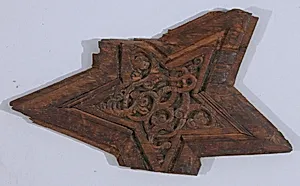
This exquisite carved wooden panel, dated 1296, hails from the rich tradition of Islamic art and measures a modest 4¾ x 7⅞ inches (12 x 20 cm), with a depth of just ½ inch (1.3 cm). Crafted by an unknown artist it exemplifies the delicate artistry of medieval woodwork, likely intended as an architectural element—perhaps adorning a door, window screen, or interior wall in a mosque, palace, or private home. Its small scale highlights the precision required for such intimate decorative pieces, now preserved at the Metropolitan Museum of Art through The Friends of the Department of Islamic Art Fund (1971). In the late 13th century, during a golden age of Islamic craftsmanship under dynasties like the Mamluks, wood carving flourished as a medium for intricate designs that evoked spiritual harmony. Free from figurative imagery to align with aniconic principles, these panels often featured rhythmic geometric patterns, floral arabesques, or calligraphy, blending functionality with beauty. This panel's survival speaks to the enduring legacy of such techniques, where artisans used chisels and gouges to transform humble wood into luminous surfaces that played with light and shadow. Visitors will appreciate how this artifact bridges architecture and ornamentation, offering a window into daily life and sacred spaces of the medieval Islamic world. Its tag as "Architecture" underscores its role in larger structural ensembles, reminding us of the seamless integration of art and built environment in that era.