
Panel
Unknown Artist
late 18th–early 19th century
Medium
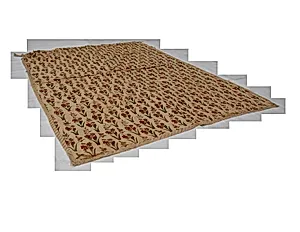
Cotton; plain weave; mordant painted and dyed, resist dyed (kalamkari)
Dimensions
L. 85 in. (215.9 cm) W. 59 in. (149.9 cm)
Classification
Textiles
Department
Islamic Art
Museum
Metropolitan Museum of Art, New York, NY
Credit
Gift of Mr. and Mrs. Yukikazu Iwasa, in memory of Seizaburo and Shizuko Iwasa, 2009
Accession Number
2009.172
Rights
Public Domain
Tags
Art Historical Context
This magnificent cotton panel, created by an unknown artist in the late th to early 19th century, exemplifies the exquisite floral artistry of Islamic textile traditions. Measuring an impressive 85 by 59 inches, it intricate motifs of flowers and leaves, in vibrant natural dyes. Likely intended as a wall hanging, room divider, or tent panel, its large scale would have transformed domestic or ceremonial spaces with its lush, naturalistic patterns—a hallmark of Islamic decorative arts that celebrated the beauty of the natural world while adhering to aniconic principles. The artwork showcases kalamkari, a revered South Indian technique meaning "pen work." Artisans used a kalam (bamboo pen) to apply mordants—chemical fixatives—to cotton plain weave fabric, allowing dyes to bind selectively. Resist dyeing with wax or clay prevented color uptake in certain areas, creating fine details and bold contrasts. This labor-intensive process, involving multiple dye baths from plants like indigo and madder, highlights the skill of workshops in regions like Andhra Pradesh, where Persian influences from Mughal patronage blended with local ingenuity. Housed in the Metropolitan Museum of Art's Islamic Art department, this panel reflects the cultural crossroads of trade and empire in colonial-era India. A generous gift from Mr. and Mrs. Yukikazu Iwasa, it invites us to appreciate the enduring legacy of handcrafted textiles in evoking paradise gardens, a poetic motif in Islamic design.