
Panel
Mid–18th century
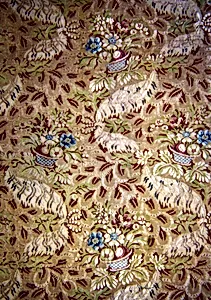
Medium
Silk, plain weave with patterning warps, brocading wefts, and self-patterned by complementary ground wefts
Dimensions
101.4 × 40 cm (54 × 21 1/4 in.); Repeat: 37 × 26.7 cm (14 1/2 × 10 1/2 in.)
Classification
textile
Department
Textiles
Museum
Art Institute of Chicago
Accession Number
149686
Rights
Public Domain
Art Historical Context
This exquisite silk panel from the mid-18th showcases the pinnacle of textile artistry during the Enlightenment era, when luxurious fabrics adorned Europe's elite homes and wardrobes. Woven on a plain weave foundation, it measures an impressive 101.4 40 cm, with a repeating pattern unit of 37 × 26.7 cm, suggesting it was produced for scalable applications like garments, draperies, or upholstery. Housed in the Art Institute Chicago's Textiles Department, this anonymous masterpiece highlights the era's demand for opulent, intricately patterned silks, often traded along global routes from Asia to Western ateliers. The panel's construction reveals sophisticated techniques: patterning warps create structural motifs directly in the loom, while brocading wefts—supplementary threads—add raised, shimmering effects for depth and richness. Complementary ground wefts, alternating colors in the base fabric, produce self-patterning without extra materials, a clever method that maximized efficiency and visual complexity. These innovations, likely from specialized weaving centers like Lyon or Spitalfields, demonstrate how 18th-century artisans blended technical precision with aesthetic splendor. As a cultural artifact, this panel evokes the lavish world of rococo interiors and courtly fashion, where silk symbolized wealth and refinement. Its survival offers a tactile glimpse into pre-industrial craftsmanship, inviting visitors to appreciate the labor-intensive beauty hidden in every thread.
About the Artist
Unknown
The artist designated as "Unknown" in our virtual museum's collection exemplifies a poignant chapter in art history: creators whose identities have faded into obscurity despite the enduring power of their work. With only one known artwork attributed to them in our holdings, this figure represents countless anonymous hands that shaped visual culture across centuries. Museums worldwide, including th...