
Panel (Dress Fabric)
1703/05
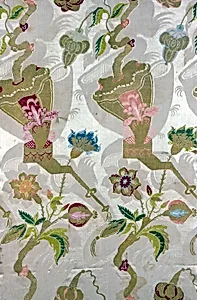
Medium
Silk and gilt-metal-strip-wrapped silk, satin weave with brocading wefts and self-patterned by areas of plain weave
Dimensions
98 × 52.9 cm (38 5/8 × 20 7/8 in.); Repeat: 76.4 × 25.8 cm (30 1/8 × 10 1/8 in.)
Classification
textile
Department
Textiles
Museum
Art Institute of Chicago
Accession Number
103914
Rights
Public Domain
Art Historical Context
Step into the opulent world of early 18th-century fashion with this exquisite *Panel (Dress Fabric)* from the Art Institute of Chicago's Textiles Department. Dated between 1703 and 1705, this silk panel measures 98 × 52.9 cm, featuring a repeating pattern unit of 76.4 × 25.8 cm. Crafted for high-society garments, it exemplifies the lavish textiles that adorned Europe's elite during the late Baroque era. The fabric's brilliance comes from its sophisticated construction: a satin weave base provides a smooth, lustrous surface, enhanced by brocading wefts—supplementary threads that create raised, ornate motifs—and self-patterning through contrasting areas of plain weave. Most strikingly, gilt-metal-strip-wrapped silk threads introduce shimmering gold accents, a labor-intensive technique where fine metal strips are coiled around silk cores before weaving. This method not only caught the light in candlelit salons but also showcased the weaver's mastery, likely from renowned silk-producing centers like Lyon, France. As a fragment of dress fabric, it offers a tangible link to the period's social splendor, where such sumptuous materials signaled wealth and status. Visitors can appreciate how these panels were pieced into grand robes, blending artistry with wearable luxury in an age of expanding global trade in silks.
About the Artist
Unknown
The artist designated as "Unknown" in our virtual museum's collection exemplifies a poignant chapter in art history: creators whose identities have faded into obscurity despite the enduring power of their work. With only one known artwork attributed to them in our holdings, this figure represents countless anonymous hands that shaped visual culture across centuries. Museums worldwide, including th...