
Panel (Tapestry weave)
1600-1800
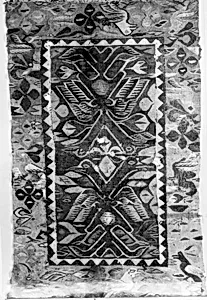
Medium
Wool; slit and interlocking tapestry weave
Dimensions
119.4 × 81.3 cm (47 × 32 in.)
Classification
textile
Department
Textiles
Museum
Art Institute of Chicago
Accession Number
85469
Rights
Public Domain
Art Historical Context
This exquisite wool tapestry weave panel, created between 1600 and 1800, exemplifies the masterful textile traditions of its era. Measuring 47 × 32 inches (119.4 × 81.3 cm), it hails from the Art Institute of Chicago's Textiles Department, where such works highlight the artistry of anonymous makers who wove beauty into everyday and ceremonial fabrics. Though the artist remains unknown, the panel's survival speaks to the durability and prestige of textiles during the 17th and 18th centuries, a time when woven goods served as currency, status symbols, and storytelling mediums across cultures. The medium employs slit and interlocking tapestry weaves, sophisticated techniques that allowed weavers to create vibrant, discontinuous color patterns without wasting precious wool. In slit tapestry, adjacent color areas are separated by a small gap to prevent bleeding, while interlocking—where wefts from neighboring motifs twist together—ensures structural integrity and minimizes slits from widening with use or age. These methods, rooted in ancient practices, reached new heights of complexity in this period, enabling intricate designs that could depict narratives, motifs, or abstract forms, though specifics here remain a tantalizing mystery. As a standalone panel, it likely adorned garments, furnishings, or ritual objects, underscoring textiles' cultural importance as portable art. Visitors to the Art Institute can appreciate how such pieces bridge history and craft, inviting us to ponder the skilled hands behind these enduring threads.
About the Artist
Unknown
The artist designated as "Unknown" in our virtual museum's collection exemplifies a poignant chapter in art history: creators whose identities have faded into obscurity despite the enduring power of their work. With only one known artwork attributed to them in our holdings, this figure represents countless anonymous hands that shaped visual culture across centuries. Museums worldwide, including th...