
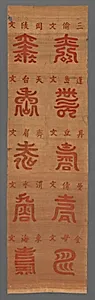
清 緙絲壽字屏條|Panel with Longevity (Shou) Characters
Unknown Artist
19th century
Medium
Silk and metallic thread tapestry (kesi)
Dimensions
79 1/4 x 22 in. (201.29 x 55.88 cm)
Classification
Textiles-Tapestries
Culture & Period
China · Qing dynasty (1644–1911)
Department
Asian Art
Museum
Metropolitan Museum of Art, New York, NY
Credit
Gift of Alice Boney, 1945
Accession Number
45.117.2
Rights
Public Domain
Art Historical Context
This exquisite *Panel with Longevity (Shou Characters* is a stunning example of 19th-century Qing dynasty (1644–1911) textile artistry from China. Woven in the intricate kesi technique—a finely-tapestry method using silk and shimmering metallic threads—it measures an impressive 79¼ x 22 inches, for adorning a folding screen or room divider. The bold, repeated *shou* (longevity) characters, rendered luxurious gold and vibrant hues, embody the era's fascination with auspicious symbols, wishing eternal health and prosperity to viewers. Kesi weaving, prized for its precision akin to painting with threads, reached new heights during the Qing period, when imperial workshops produced such masterpieces for elite homes and palaces. Each thread is meticulously interlocked without floating yarns, creating a seamless, jewel-like surface that catches the light beautifully. This panel, gifted to the Metropolitan Museum of Art in 1945 by Alice Boney, showcases the technical virtuosity of anonymous artisans whose skill rivaled the finest painters. In Chinese culture, the *shou* motif was ubiquitous in decorative arts, especially during celebrations like birthdays or New Year, symbolizing harmony with nature's cycles. Hanging this panel would have infused a space with positive energy, reflecting Confucian ideals of longevity and filial piety—a timeless reminder of art's power to bless everyday life.