
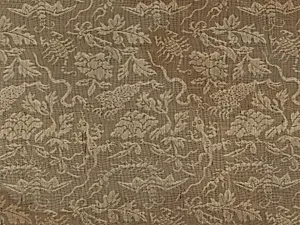
明萬曆 五毒紋紗羅|Panel with the five poisonous creatures
Unknown Artist
Medium
Silk in patterned simple gauze
Dimensions
19 × 22 in. (48.3 × 55.9 cm) Mount dimension with the plexi bonnet: 24 3/8 × 27 1/4 × 1 1/2 in. (61.9 × 69.2 × 3.8 cm)
Classification
Textiles-Tapestries
Culture & Period
China · Ming dynasty (1368–1644), Wanli period (1573–1620)
Department
Asian Art
Museum
Metropolitan Museum of Art, New York, NY
Credit
Purchase, The B.D.G. Leviton Foundation Gift, 1987
Accession Number
1987.7
Rights
Public Domain
Tags
Art Historical Context
This exquisite silk panel, titled *Panel with the five poisonous creatures* (明萬曆 五毒紋紗羅), hails from China's Ming dynasty during the Wanli period (3–1620), a time of refined craftsmanship and cultural flourishing. Woven in patterned simple gauze—a delicate, open-weave silk technique that creates a lightweight, translucent fabric—this 19 × 22-inch textile showcases the era's mastery of looms. Such panels were often used in decorative screens, garments, or room dividers, blending functionality with artistry in elite households. The central motif features the "five poisons"—typically a toad, scorpion, snake, spider, and centipede—drawn from Chinese folklore. Far from mere decoration, these creatures held apotropaic power, believed to ward off real poisons, venomous insects, and malevolent spirits, especially during the humid summer months and the Dragon Boat Festival. Rendered in intricate patterns, they embody the Ming fascination with symbolism, where danger is transformed into protection. Now at the Metropolitan Museum of Art (purchase, The B.D.G. Leviton Foundation Gift, 1987), this piece invites us to appreciate the subtle elegance of Ming textiles, where every thread weaves history and superstition into beauty.