
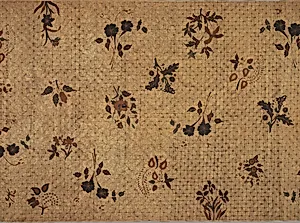
Kain panjang (long sarong)
19th century
Classification
printed, dyed & painted textiles
Department
Smithsonian Collection
Museum
Smithsonian American Art Museum
Credit
Gift of Harvey Smith
Accession Number
1968-135-96
Rights
Public Domain
About this artwork
Research in Progress
Art Historical Context
### Kain Panjang (Long SarongThis 19th-century *kain panjang*, or long sarong, is a striking example of traditional textile artistry from Southeast Asia, likely Indonesia, where such garments were essential to daily life and cultural expression. Worn wrapped around the body as a garment by men, the *kain panjang* (meaning "long cloth" in Malay) measured about 2.5 meters in length, offering both practicality and a canvas for intricate designs. Housed in the Smithsonian American Art Museum's collection as a gift from Harvey Smith, it reflects growing 19th-century Western fascination with global crafts amid colonial trade routes. Classified among printed, dyed, and painted textiles, this piece showcases sophisticated techniques that blend functionality with aesthetics. Artisans employed methods like block-printing, resist-dyeing (possibly batik-style with wax), and freehand painting to create vibrant patterns on cotton or silk. These labor-intensive processes, passed down through generations, symbolized social status, regional identity, and spiritual beliefs—motifs often drew from nature, mythology, or geometry. Though research continues, this sarong invites us to appreciate the anonymous skill of its makers and the enduring allure of textiles as wearable art. A testament to cross-cultural exchange, it bridges Asian heritage with American collections, reminding visitors of art's power to connect worlds. (198 words)
About the Artist
Unknown
The artist designated as "Unknown" in our virtual museum's collection exemplifies a poignant chapter in art history: creators whose identities have faded into obscurity despite the enduring power of their work. With only one known artwork attributed to them in our holdings, this figure represents countless anonymous hands that shaped visual culture across centuries. Museums worldwide, including th...