
Panels from a Funerary Couch (Guanchuang)
Northern Wei dynasty (386–535); c. 525
Medium
Limestone
Dimensions
45.7 × 133 × 3.5 cm (18 × 52 3/16 × 1 3/8 in.)
Classification
stone
Department
Arts of Asia
Museum
Art Institute of Chicago
Accession Number
142531
Rights
Public Domain
About this artwork
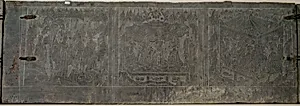
These stone panels were originally assembled to enclose the back and short sides of a low, couchlike platform that held a coffin in a tomb. This “funerary couch” was probably supported along the front and back by two long stone slabs, each elevated on rectangular feet. Such a coffin platform may also have been partially enclosed in front by two stones carved to resemble gate towers, making the couch resemble the walled enclosure of a villa or a city. The original order of the Art Institute ston...
Art Historical Context
Step into the solemn world of Northern Wei dynasty burial practices with these striking *Panels from a Funerary Couch (Guuang)*, carved around 525 CE from limestone. Dating to China's Northern Wei period (386–535), artifact once adorned a guanchuang—a ceremonial couch or bier used to carry the deceased to their tomb and serve as eternal furniture in the afterlife. 45.7 × 133 × 3.5 cm, these panels exemplify the era's masterful stone carving, blending utility with profound spiritual symbolism. The Northern Wei, ruled by the nomadic Xianbei Tuoba clan, marked a golden age for Buddhist art in northern China, fusing Central Asian influences with indigenous traditions. Funerary couches like this were essential tomb goods, believed to ensure the ancestor's comfort and protection in the afterlife. Carved in low relief, the limestone panels likely featured motifs of guardians, mythical beasts, or daily life scenes—common in Wei tomb art—to ward off evil and invoke prosperity. Housed in the Art Institute of Chicago's Arts of Asia department, these panels highlight the dynasty's innovative sculptural techniques, such as fluid drapery and dynamic poses that prefigure Tang dynasty realism. They offer a window into early medieval Chinese beliefs, where art bridged the living and the eternal.
About the Artist
Unknown
The artist designated as "Unknown" in our virtual museum's collection exemplifies a poignant chapter in art history: creators whose identities have faded into obscurity despite the enduring power of their work. With only one known artwork attributed to them in our holdings, this figure represents countless anonymous hands that shaped visual culture across centuries. Museums worldwide, including th...