
Part of a Buddhistic Sutra
dated 797
Medium
Handscroll; ink and color on paper
Dimensions
11 1/2 x 52 1/2 in. (29.2 x 133.4 cm)
Classification
Paintings
Culture & Period
China · Tang dynasty (618–907)
Department
Asian Art
Museum
Metropolitan Museum of Art, New York, NY
Credit
Fletcher Fund, 1927
Accession Number
27.70
Rights
Public Domain
Tags
Art Historical Context
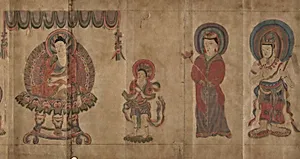
This exquisite handscroll fragment, titled *Part of a Buddhistic Sutra* and dated 797, offers a rare glimpse into Tang dynasty China (618–907), a age of artistic and cultural flourishing. Created by an unidentified artist using ink and color on paper it measures 11½ x 52½ inches and belongs to the Metropolitan Museum of's Asian Art collection, acquired through the Fletcher Fund in 7. As a painted sutra—a Buddhist scripture—this work blends sacred text with illustrations of human figures and Buddha, embodying the era's deep devotion to Buddhism, which had arrived in China centuries earlier via the Silk Road. The Tang period marked Buddhism's peak influence, with emperors patronizing grand temples and monasteries, fostering intricate artworks like this handscroll. Handscrolls were prized for their portability and sequential unfolding, allowing viewers to meditate on unfolding narratives much like unrolling a story. The use of ink for precise calligraphy alongside vibrant colors for figures highlights masterful techniques in composition and harmony, typical of Tang painting's elegance and dynamism. Though only a part survives, this precisely dated piece underscores the sutra's role in daily spiritual life and elite scholarship, preserving teachings through visually compelling art. Visitors can appreciate how it bridges text and image, inviting contemplation of enlightenment amid Tang China's cosmopolitan vibrancy.