
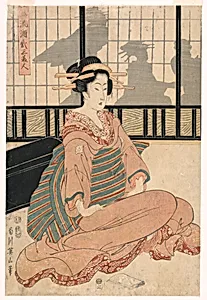
Part of a triptych: "The Fox Forfeit Game"
1814
Classification
theater
Department
Smithsonian Collection
Museum
Smithsonian American Art Museum
Credit
Gift of the Estate of Mrs. Robert H. Patterson
Accession Number
1941-31-151
Rights
Public Domain
About this artwork
Research in Progress
Art Historical Context
"Part of a Triptych: 'The Fox Forfeit Game'" is a captivating work by Kikugawa Eizan, a prominent Japanese ukiyo-e artist active the Edo period. Created in 1814 this piece belongs to a triptych—a traditional format of three joined panels often used in woodblock printing to depict expansive scenes. Housed in the Smithsonian American Art Museum as part of the Smithsonian Collection (gift of the Estate of Mrs Robert H. Patterson), it reflects the vibrant world of Japanese popular culture. Classified under "theater," it likely illustrates a dramatic moment from kabuki performance, where foxes—mystical kitsune figures in folklore—play a central role in games of wit and forfeit. Eizan's style exemplifies the refined elegance of late ukiyo-e, blending dynamic composition with intricate details in costumes and expressions. Though the medium remains under research, such works typically employed woodblock printing on paper, allowing mass production for theater enthusiasts. This triptych captures the theatrical flair of 19th-century Japan, where kabuki stars were celebrities, and supernatural tales like fox spirits added enchantment to everyday entertainment. Its presence in an American museum highlights the global reach of ukiyo-e, influencing later Western artists like Van Gogh. Visitors are invited to ponder the playful yet profound cultural interplay of myth, performance, and artistry in this intriguing fragment of Edo-era life. (198 words)