
Passage 158 (Hyaku gojuhachi dan), from the series "Essays in Idleness for the Asakusa Group (Asakusagawa Tsurezuregusa)"
early 19th century
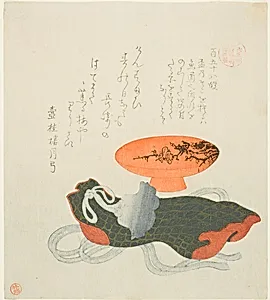
Medium
Color woodblock print; shikishiban, surimono
Dimensions
21 × 18.6 cm (8 5/16 × 7 3/8 in.)
Classification
woodblock print
Department
Arts of Asia
Museum
Art Institute of Chicago
Accession Number
81372
Rights
Public Domain
Art Historical Context
Kubo Shunman's *Passage 158 (Hyaku gojuhachi dan)* from the series *Essays in Idleness the Asakusa GroupAsakusagawa Tszuregusa)* is a delightful early 19th-century color woodblock print, capturing the playful spirit of Edo-period Japan. Created around 1810–1820, it reimagines passages from the 14th-century classic *Tsurezuregusa* (Essays in Idleness by Yoshida Kenkō, a meditative text on life's fleeting joys. Shunman a master ukiyo-e artist known for his witty surimono—luxury prints commissioned by poetry circles—localizes the essays to Asakusa, Tokyo's vibrant entertainment district, blending timeless philosophy with urban bustle. This shikishiban-format surimono (21 × 18.6 cm) exemplifies refined woodblock techniques: vibrant colors from multiple carved blocks, subtle embossing for texture, and metallic accents like mica for a shimmering effect. Privately produced for elite patrons, often New Year's gifts, these prints elevated printmaking to high art, rivaling paintings in detail and intimacy. Shunman's fluid lines and humorous vignettes highlight everyday scenes, making profound ideas accessible and fun. Housed in the Art Institute of Chicago's Arts of Asia collection, this work reveals how surimono bridged literati culture and popular ukiyo-e, preserving poetry amid Japan's woodblock print golden age before mass production. A charming window into Edo wit! (198 words)
About the Artist
Kubo Shunman · 1757–1820
Japanese, 1757–1820