
Patolu
18th/19th century
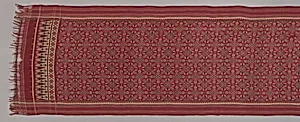
Medium
Silk and silver-metal-strip-wrapped silk, stripes of warp and weft resist dyed (double ikat), plain weave, stripes of weft resist dyed (weft ikat), plain weave , bands of plain weave and bands of open warps; plied and knotted main warp fringe
Dimensions
510.5 × 121.9 cm (201 × 48 in.)
Classification
textile
Department
Textiles
Museum
Art Institute of Chicago
Accession Number
180299
Rights
Public Domain
About this artwork
Patola are finely woven silk textiles made in Gujarat, India. They became highly valued imports in Indonesia, where merchants gave them to local rajas (rulers) to curry favor for trade. As a result, they came to be prized by their owners as heirlooms denoting high status. Artists create the designs using a double-ikat technique, dyeing the threads prior to weaving. Patola with the geometric basket design (chhabadi bhat), like the example on the right here, were used in funeral ceremonies in eas...
About the Artist
Unknown
The artist designated as "Unknown" in our virtual museum's collection exemplifies a poignant chapter in art history: creators whose identities have faded into obscurity despite the enduring power of their work. With only one known artwork attributed to them in our holdings, this figure represents countless anonymous hands that shaped visual culture across centuries. Museums worldwide, including th...