
Peep-Show Print
mid-18th century
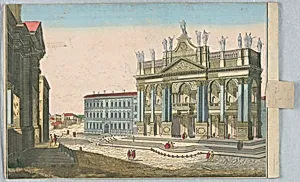
Medium
Classification
Department
Smithsonian Collection
Museum
Smithsonian American Art Museum
Credit
Gift of Eleanor and Sarah Hewitt
Accession Number
1931-94-325
Rights
Public Domain
About this artwork
Research in Progress
Art Historical Context
Step into the whimsical world of 18th optical entertainment with this intriguing *Peep-Show Print*, a mid-18th-century work from the Smithsonian American Art's collection. Peep-show prints were designed for portable viewing devices—simple tubes or boxes with lenses—allowing viewers to peer through a small aperture at layered scenes that created a startling illusion of depth and three-dimensionality. Though the artist remains unknown, these prints were a hallmark of popular graphic arts, blending artistry with playful technology. Crafted as a print, likely using techniques like etching or engraving on paper, this piece exemplifies the era's fascination with perspective and visual trickery. Mid-18th-century Europe and America buzzed with such novelties, sold at fairs and markets as affordable amusements for all ages. They drew on Renaissance principles of linear perspective, refined by artists like Canaletto, but made them accessible to everyday audiences. Generously gifted by Eleanor and Sarah Hewitt, this print now awaits further research, offering a window into colonial-era leisure and the democratizing power of prints. Imagine holding it to your eye, a street scene or fantastical vista springing to life— a delightful precursor to modern stereoscopes and virtual reality. (198 words)
About the Artist
Unknown
The artist designated as "Unknown" in our virtual museum's collection exemplifies a poignant chapter in art history: creators whose identities have faded into obscurity despite the enduring power of their work. With only one known artwork attributed to them in our holdings, this figure represents countless anonymous hands that shaped visual culture across centuries. Museums worldwide, including th...