
Pendant
Unknown Artist
12th–13th century
Medium
Silver, gilt, niello
Dimensions
H. 2 11/16 in. (6.8 cm) Gr. W. 1 3/4 in. (4.4 cm) D: including foot on back 3/8 in (.95 cm)
Classification
Jewelry
Department
Islamic Art
Museum
Metropolitan Museum of Art, New York, NY
Credit
Rogers Fund, 1971
Accession Number
1971.28
Rights
Public Domain
Art Historical Context
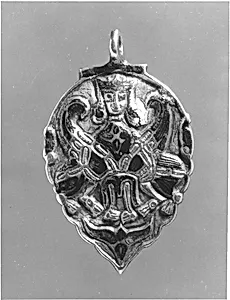
This exquisite silver pendant, dating to the 12th–13th century, hails from the Islamic world and exemplifies the refined artistry of medieval jewelry-making. Crafted as a personal ornament, likely worn as a necklace, it measures just 2 11/16 inches high, making it an intimate treasure. Acquired through the Rogers Fund in 1971, it now graces the Metropolitan Museum of Art's Art collection. The pendant's medium—silver with gilding and niello—highlights sophisticated metalworking techniques. Gilding applies a thin layer of gold for luminous accents, while niello involves engraving designs and filling them with a black sulfur alloy, fired to create sharp, contrasting motifs. These methods, prized in Islamic craftsmanship, produced durable, visually striking pieces that balanced functionality with beauty. The presence of human figures, as suggested by its tags, reflects secular decorative traditions, where such imagery appeared in jewelry despite broader aniconic tendencies in religious art. As a rare survivor of daily wear, this pendant offers a glimpse into the cultural life of its era, where jewelry served amuletic, status, or aesthetic purposes. Its intricate details invite visitors to appreciate the ingenuity of anonymous artisans who blended technology and artistry across centuries.