
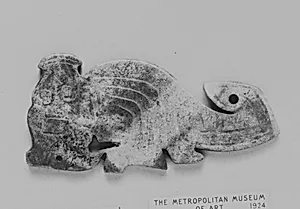
西周龍形玉佩|Pendant in the shape of a dragon
Unknown Artist
11th–10th century BCE
Medium
Jade (nephrite)
Dimensions
H. 1 3/8 in. (3.5 cm); W. 3 1/8 in. (7.9 cm)
Classification
Jade
Culture & Period
China · Western Zhou dynasty (1046–771 B.C.)
Department
Asian Art
Museum
Metropolitan Museum of Art, New York, NY
Credit
Rogers Fund, 1924
Accession Number
24.51.13
Rights
Public Domain
Tags
Art Historical Context
Hailing from China's Western Zhou dynasty (104–771 BCE), this exquisite jade pendant depicts a sinuous dragon, a motif that has long symbolized imperial power, good fortune, and cosmic forces in Chinese culture. Carved from nephrite jade—prized for its toughness and luminous quality—the piece measures just 3.5 cm high and 7.9 cm wide, suggesting it was worn as a personal ornament by elites, perhaps suspended from a belt or sash during rituals or daily life. Jade-working reached sophisticated heights during the Zhou period, with artisans employing fine incising, drilling, and polishing techniques to capture the dragon's dynamic curls and fierce features on such a small scale. Nephrite's durability made it ideal for heirloom objects, embodying purity and immortality in Confucian and ancestral traditions. This pendant reflects the era's blend of artistry and spirituality, where dragons evoked the emperor's divine authority and harmony with nature. Acquired through the Rogers Fund in 1924 and now in the Metropolitan Museum of Art's Asian Art collection, it offers a window into Bronze Age China's material culture, where jade rivaled bronze in prestige. Visitors, imagine the soft glow of this ancient treasure against silk robes— a timeless emblem of elegance and mysticism.