
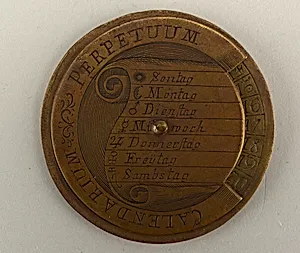
Perpetual calendar
early 18th century
Classification
metalwork
Department
Smithsonian Collection
Museum
Smithsonian American Art Museum
Credit
Smithsonian American Art Museum
Accession Number
1957-165-18
Rights
Public Domain
About this artwork
Research in Progress
Art Historical Context
Nestled in the Smithsonian American Art Museum's collection, this *Perpetual Calendar* from the early 18th century exemplifies the exquisite metalwork of its era. Classified as a functional art object, it likely features intricate engravings or movable components crafted from metals like brass or silver—materials prized for their durability and sheen. Though the exact medium and artist remain under research, such pieces highlight the skilled artisanship of colonial workshops, where utility met artistry in everyday tools. Perpetual calendars were ingenious devices that displayed dates, lunar phases, and zodiac signs indefinitely, without annual adjustments, making them essential for navigators, farmers, and scholars in an age before printed almanacs were widespread. Produced during the Enlightenment's early stirrings, this artifact reflects a fascination with timekeeping and celestial mechanics, bridging science and craft. Its presence in the Smithsonian underscores the museum's commitment to preserving humble yet sophisticated American metalwork traditions. As research progresses, this unassuming treasure invites us to ponder the anonymous maker's precision—a testament to how everyday objects embodied cultural ingenuity in early 18th-century America.
About the Artist
Unknown
The artist designated as "Unknown" in our virtual museum's collection exemplifies a poignant chapter in art history: creators whose identities have faded into obscurity despite the enduring power of their work. With only one known artwork attributed to them in our holdings, this figure represents countless anonymous hands that shaped visual culture across centuries. Museums worldwide, including th...