
Persimmon Bowl
Northern Song dynasty (960–1127), 11th/12th century
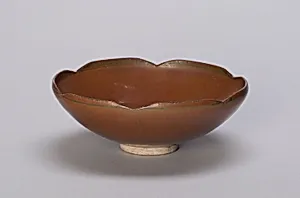
Medium
Russet Yaozhou ware; light grey stoneware with russet-surfaced dark brown glaze
Dimensions
4.3 × 11.7 cm (1 11/16 × 4 9/16 in.); Diam.: 11.7 cm (4 9/16 in.)
Classification
bowl
Department
Arts of Asia
Museum
Art Institute of Chicago
Accession Number
204350
Rights
Public Domain
Art Historical Context
Behold the *Persimmon Bowl*, delicate treasure from China's Northern Song dynasty (960–1127), crafted in the 11th or 12th century. This small, elegant vessel—measuring just 4.3 × 11.7 cm—exemplifies Yaozhou ware, produced at the renowned kilns in present-day Shaanxi province. Made of light grey stoneware and coated in a striking russet-surfaced brown glaze, it earns its name from the glaze's warm, persimmon-like hue,oking the fruit's rich autumnal tones. During the Song era, ceramics reached artistic heights, blending functionality with poetic refinement. Yaozhou potters mastered high-fired stoneware techniques, achieving glazes that flowed like liquid silk in the kiln's intense heat (around 1,300°C). The russet surface likely resulted from iron-rich slips and controlled reduction firing, creating subtle depth and texture that catches the light beautifully. Though intended for daily use—perhaps for tea or fruit—this bowl embodies the Song connoisseur's love for understated elegance over ornate decoration. Housed in the Art Institute of Chicago's Arts of Asia department, the *Persimmon Bowl* offers a window into imperial China's ceramic innovation, where humble objects became symbols of cultural sophistication. Its survival speaks to the enduring allure of Song craftsmanship.
About the Artist
Unknown
The artist designated as "Unknown" in our virtual museum's collection exemplifies a poignant chapter in art history: creators whose identities have faded into obscurity despite the enduring power of their work. With only one known artwork attributed to them in our holdings, this figure represents countless anonymous hands that shaped visual culture across centuries. Museums worldwide, including th...