
Piece
Unknown Artist
18th–19th century
Medium
Silk
Dimensions
5 x 5 in. (12.70 x 12.70 cm)
Classification
Textiles-Woven
Culture & Period
Japan · Edo (1615–1868)
Department
Asian Art
Museum
Metropolitan Museum of Art, New York, NY
Credit
Gift of Mr. and Mrs. H. O. Havemeyer, 1896
Accession Number
96.14.257
Rights
Public Domain
Art Historical Context
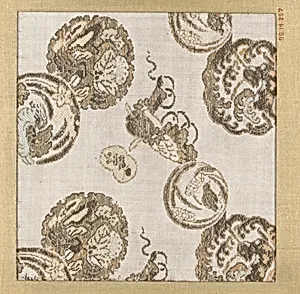
This exquisite silk textile fragment, simply titled *Piece*, hails from Japan's Edo period (1615–1868), a time of remarkable stability and cultural flourishing under the Tokugawa shunate. Measuring just 5 x 5 inches, this woven square exemplifies the era's mastery of silk production, a cornerstone of Japan's economy and artistry. During the Edo years, silk weaving reached new heights of intricacy, with artisans employing sophisticated loom techniques to create luxurious fabrics for kimonos, obi sashes, and ceremonial garments prized by samurai, merchants, and commoners alike. The medium of silk—prized for its luster, durability, and ability to hold vibrant dyes—underscores the technical prowess of anonymous Edo weavers. These textiles often featured repeating motifs drawn from nature, seasons, or daily life, reflecting ukiyo-e influences and a celebration of impermanence (mono no aware). Though the specific design here is unrecorded, its survival as a small swatch speaks to the period's export trade and appreciation by Western collectors. Generously gifted to the Metropolitan Museum of Art in 1896 by Mr. and Mrs. H. O. Havemeyer, prominent patrons of Asian art, this piece invites us to marvel at Japan's textile heritage. It reminds visitors of how everyday craftsmanship embodied profound aesthetic and cultural values, bridging East and West across centuries.