
Piece
Unknown Artist
18th–19th century
Medium
Silk
Dimensions
4 3/4 x 2 in. (12.07 x 5.08 cm)
Classification
Textiles-Woven
Culture & Period
Japan · Edo period (1615–1868)
Department
Asian Art
Museum
Metropolitan Museum of Art, New York, NY
Credit
Gift of Mr. and Mrs. H. O. Havemeyer, 1896
Accession Number
96.14.604
Rights
Public Domain
Tags
Art Historical Context
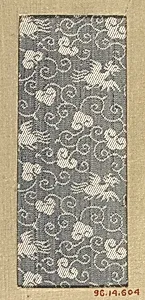
This delicate silk textile, titled simply *Piece*, hails from Japan's Edo period (16151868), an era of relative peace and cultural flourishing marked by vibrant urban arts and craftsmanship. Woven with exquisite precision, this tiny fragment—measuring just 4 3/4 x 2 inches—likely served as a decorative element for clothing, accessories, or pouches, showcasing the era's mastery of silk weaving techniques. Japanese artisans during the Edo period refined methods like *kasuri* or supplementary weft weaving to create intricate patterns, transforming everyday fabrics into wearable art. Adorned with mythical creatures—a hallmark of Japanese folklore—the design evokes dragons, phoenixes, or kirin, symbols of power, protection, and auspicious fortune deeply rooted in Shinto and Buddhist traditions. These motifs were popular in textiles, blending everyday utility with spiritual resonance, reflecting Edo society's blend of prosperity and superstition. Its small scale highlights the portability and intimacy of personal adornments in a time when sumptuary laws regulated lavish displays. A generous gift to the Metropolitan Museum of Art from Mr. and Mrs. H. O. Havemeyer in 1896, this piece offers a window into Japan's textile heritage, reminding us how even modest objects carried profound cultural weight.