
Pilaster
Unknown Artist
16th century
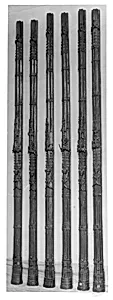
Medium
Wood, gold leaf
Dimensions
9 ft. 5 in. × 4 1/2 in. × 5 1/2 in. (287 × 11.4 × 14 cm)
Classification
Woodwork-Architectural
Culture
Italian or French
Department
Medieval Art
Museum
Metropolitan Museum of Art, New York, NY
Credit
Rogers Fund, 1907
Accession Number
07.287.3
Rights
Public Domain
Art Historical Context
This elegant pilaster, crafted in the 16th century from and adorned with shimmering gold leaf, stands as a testament to the exquisite woodworking traditions of Renaissance-era Italy or France. Measuring an impressive 9 feet 5 inches tall but remarkably slender at just 4½ by 5½ inches, it served as an architectural element—likely a flattened column projection used to decorate walls in grand ecclesiastical or palatial interiors. Acquired by The Metropolitan Museum of Art in1907 through the Rogers Fund, it now graces the Medieval Art department, bridging the ornate late Gothic styles with emerging Renaissance classicism. The pilaster's medium highlights masterful artisanal techniques: finely carved wood forms the structural base, while the application of gold leaf imparts a luxurious glow, evoking divine radiance in sacred spaces or royal opulence in secular ones. Gold leaf, a labor-intensive process involving thin sheets of beaten gold applied over bole (clay adhesive), was prized for its durability and symbolic wealth, common in both Italian and French workshops of the period. Though the artist remains unknown, this piece reflects the era's revival of classical motifs amid intricate detailing, underscoring the anonymous yet highly skilled craftsmen who elevated everyday architecture into art. Visitors can marvel at how such slender supports once framed altars or doorways, whispering stories of 16th-century devotion and grandeur.