
Pilaster
Unknown Artist
16th century
Medium
Wood, gold leaf
Dimensions
9 ft. 5 in. × 4 1/4 in. × 5 1/2 in. (287 × 10.8 × 14 cm) with modern base: 10 ft. 3 in. (312.4 cm)
Classification
Woodwork-Architectural
Culture
Italian or French
Department
Medieval Art
Museum
Metropolitan Museum of Art, New York, NY
Credit
Rogers Fund, 1907
Accession Number
07.287.8
Rights
Public Domain
Art Historical Context
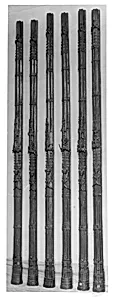
This elegant pilaster, crafted in the 16th by an unknown artist, as a testament to the refined woodwork of Renaissance-era Italy or France. Measuring nearly 10 feet tall with its modern base but remarkably slender at just over 4 inches wide, exemplifies architectural decoration designed to enhance walls in grand interiors, such as churches, palaces, altars. Housed in the Metropolitan Museum of Art's Art Department since its acquisition through the Rogers Fund in 7, it bridges late Gothic traditions and emerging Renaissance opulence. Carved from wood and adorned with shimmering gold leaf, the pilaster showcases masterful gilding techniques that were labor-intensive and symbolic of divine splendor or worldly wealth. Artisans applied ultra-thin sheets of gold to the wood surface, creating a luminous effect that caught candlelight in dimly lit spaces, drawing the eye upward in architectural harmony. Its flattened columnar form—projecting subtly like a shadow of a full pillar—added rhythm and depth to flat walls without overwhelming the structure. Though its exact provenance remains mysterious, this pilaster invites us to imagine the bustling workshops of 16th-century Europe, where such pieces elevated everyday architecture into art. A subtle survivor of time, it reminds visitors of the era's blend of craftsmanship and cultural aspiration.