
Pilaster
Unknown Artist
16th century
Medium
Wood, gold leaf
Dimensions
9 ft. 4 in. × 4 3/4 in. × 5 1/2 in. (284.5 × 12.1 × 14 cm)
Classification
Woodwork-Architectural
Culture
Italian or French
Department
Medieval Art
Museum
Metropolitan Museum of Art, New York, NY
Credit
Rogers Fund, 1907
Accession Number
07.287.5
Rights
Public Domain
Art Historical Context
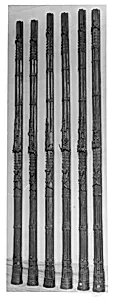
This elegant pilaster, crafted in the 16th century from wood and adorned with shimmering gold leaf, stands as a testament to Renaissance-era decorative artistry. Measuring an impressive 9 feet inches tall yet remarkably slender at just 4¾ by 5½ inches, it mimics the form of a classical column projecting from a wall, blending architectural function with opulent embellishment. Likely Italian or French in origin, such pilasters were integral to lavish interiors of churches, palaces, or grand halls, where they framed doorways, altars, or niches to enhance spatial drama and convey grandeur. The use of wood as a medium allowed for intricate carving—though details of the ornamentation are not specified here—while gold leaf imparted a luminous, jewel-like quality, evoking the wealth and piety of its patrons. Gilding techniques involved applying ultra-thin gold sheets over a bole ground, a labor-intensive process that symbolized divine light and eternal splendor in both Italian Renaissance and French Gothic Revival contexts. Acquired through the Rogers Fund in 1907, this piece now resides in the Metropolitan Museum of Art's Medieval Art department, bridging late medieval traditions with emerging Renaissance humanism. As architectural woodwork, it highlights the era's fusion of sculpture and design, inviting visitors to imagine its role in a vibrant, gilded chamber alive with candlelight and ceremony.