
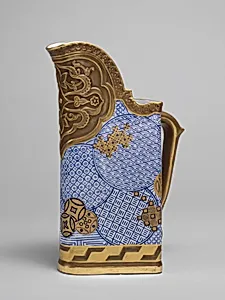
Pitcher
Medium
Bone china
Dimensions
Height: 7 3/4 in. (19.7 cm)
Classification
Ceramics-Porcelain
Culture
British, Worcester
Department
European Sculpture and Decorative Arts
Museum
Metropolitan Museum of Art, New York, NY
Credit
Purchase, Robert L. Isaacson Gift, 1996
Accession Number
1996.80
Rights
Public Domain
Art Historical Context
This elegant pitcher, crafted in 1880 by the Worcester factory in Britain, exemplifies the refined artistry of Victorian-era ceramics. Standing just under eight inches tall, the piece is made of bone china, a distinctly English innovation that combines china clay, feldspar, and calcined bone ash. This formula produces a material prized for its luminous translucency, remarkable strength, and ability to take on delicate painted decoration. During the late nineteenth century, Worcester was one of Britain’s leading porcelain manufacturers, supplying both everyday tableware and luxurious decorative objects to an expanding middle class. The factory’s output reflected the period’s taste for elegant forms and subtle ornament, often drawing on neoclassical or naturalistic motifs while maintaining the crisp, white surface that made bone china so desirable. Acquired by the Metropolitan Museum of Art through the Robert L. Isaacson Gift, this modest yet beautifully proportioned pitcher offers visitors a glimpse into the technical mastery and cultural aspirations of British ceramic production at its height.
About the Artist
Worcester factory · 1751–2008
The Worcester porcelain factory, established in 1751 in Worcester, England, by physician Dr. John Wall and apothecary William Davis along with 14 partners, marked the birth of one of Britain's most enduring ceramic enterprises. Investing £4,500 at Warmstry House on the River Severn, the founders drew on contacts with the Bristol porcelain manufactory to develop a novel soft-paste porcelain using s...