
Pitcher
1896
Medium
earthenware
Dimensions
H. 6 3/8 in.
Classification
Pitcher
Culture
American
Department
The American Wing
Museum
Metropolitan Museum of Art, New York, NY
Credit
Gift of Martin Eidelberg, 2018
Accession Number
2018.837.1
Rights
Public Domain
Art Historical Context
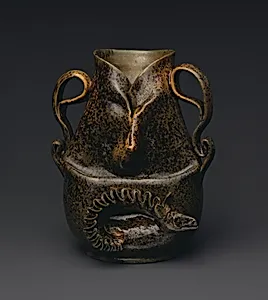
George E. Ohr's *Pitcher* (1896) is a delightful example of late 19th-century American earthenware, standing just 6 3/8 inches high. Created by the eccentric potter from Biloxi, Mississippi—affectionately known as the "Mad Potterthis piece captures the inventive energy of regional American ceramics during the Gilded Age Ohr, active from the 1880s to the early 1900s, produced thousands of vessels that blended functionality with artistic experimentation, often featuring thin walls and organic shapes that set him apart from his contemporaries. Earthenware, a low-fired clay medium prized for its accessibility and potential for bold glazes, allowed Ohr to explore sculptural forms ahead of their time. This pitcher, now in the Metropolitan Museum of Art's American Wing thanks to a 2018 gift from Martin Eidelberg, reflects the cultural vibrancy of American craftsmanship, bridging utilitarian pottery with emerging modernist impulses. Though Ohr's work was largely unrecognized in his lifetime—much of it even smashed by the artist himself—pieces like this have since gained acclaim, highlighting his role in shaping the narrative of American art. A visit to this humble yet profound vessel invites reflection on the unsung innovators of our decorative arts heritage.
About the Artist
George E. Ohr · 1857–1918
**George Edgar Ohr (1857–1918)** was an American ceramic artist renowned as the self-proclaimed “Mad Potter of Biloxi.” Born in Biloxi, Mississippi, to German immigrant parents—his father a blacksmith and his mother a grocer—he grew up in a working-class environment with little formal education. Ohr apprenticed under Joseph Fortune Meyer, a family friend and potter associated with the New Orleans...