
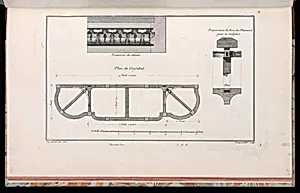
Plan du Confident
Classification
Department
Smithsonian Collection
Museum
Smithsonian American Art Museum
Credit
Purchased for the Museum by the Advisory Council
Accession Number
1921-6-279-27
Rights
Public Domain
About this artwork
Research in Progress
Art Historical Context
**Plan du Confident** is a captivating print by French artist Richard de Lalonde, active from 1780 to 1796, created between 1775 and 1788. As a master engraver and architect, Lalonde specialized in Neoclassical designs that graced the salons of the French aristocracy during the Louis XVI era. The title, translating to "Plan of the Confident," likely refers to a detailed blueprint for a *canapé confident*—an elegant S-shaped sofa designed for intimate tête-à-têtes, embodying the refined social etiquette of 18th-century France. Housed in the Smithsonian American Art Museum's collection, this work was acquired through the Advisory Council's purchase, highlighting its enduring appeal. This print exemplifies the Neoclassical movement's emphasis on symmetry, proportion, and classical motifs, bridging architecture and decorative arts. Such engravings were vital tools in the trade, allowing cabinetmakers across Europe to replicate sophisticated furniture designs with precision. Lalonde's intricate lines would have captured the sofa's ornate carvings, upholstery details, and structural elegance, reflecting the opulence just before the French Revolution upended aristocratic life. Though research on this piece is ongoing, *Plan du Confident* offers a window into the craftsmanship that defined pre-Revolutionary luxury. Visitors can appreciate how these disseminated plans fueled the spread of French style worldwide, influencing American Federal-era interiors and beyond. A testament to printmaking's power in design history! (198 words)