
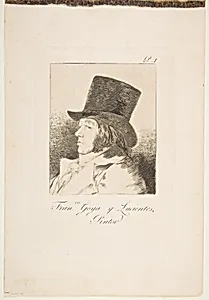
Plate 1 from "Los Caprichos": Self-portrait
1799 (published 1881–86)
Medium
Etching, aquatint, drypoint and burin
Dimensions
Plate: 8 9/16 × 5 15/16 in. (21.8 × 15.1 cm) Sheet: 11 13/16 × 8 1/4 in. (30 × 20.9 cm)
Classification
Prints
Department
Drawings and Prints
Museum
Metropolitan Museum of Art, New York, NY
Credit
Gift of Mrs. Grafton H. Pyne, 1951
Accession Number
51.530.1(1)
Rights
Public Domain
Tags
Art Historical Context
This self-portrait serves as the frontispiece to Francisco de Goya’s groundbreaking series *Los Caprichos*, first published in 1799. In it, the artist presents himself with steady gaze and formal attire, positioning the viewer as a companion in his sharp-eyed exploration of human folly. Created during Spain’s Enlightenment era, the eighty-print series blends biting social satire with fantastical imagery to critique superstition, corruption, and aristocratic excess. The work showcases Goya’s masterful command of printmaking. Combining etching for precise lines, aquatint for rich tonal washes, drypoint for velvety accents, and burin for crisp details, he achieved effects that rival painting while allowing wide distribution. Later impressions, such as this one from the 1880s, preserved these subtle textures for new generations. As both introduction and declaration of intent, the plate invites visitors to join Goya’s unflinching observation of his world—an enduring reminder of art’s power to illuminate society’s shadows.
About the Artist
Goya (Francisco de Goya y Lucientes)|Goya (Francisco de Goya y Lucientes) · 1746–1828
Francisco José de Goya y Lucientes (1746-1828) was a Spanish painter and printmaker considered the last of the Old Masters and the first of the moderns. Rising from modest provincial origins to become First Court Painter to Charles IV, Goya's career spanned the Enlightenment's optimism and the brutal Napoleonic invasion that shattered it. A mysterious illness in 1793 left him permanently deaf and ...