
Plate
Unknown Artist
late 15th–early 16th century
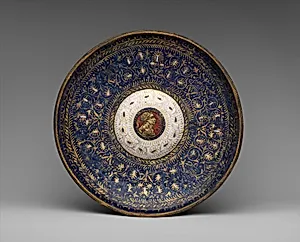
Medium
Painted enamel on copper, partly gilt; gilt brass
Dimensions
Diam. 11 1/8 in. (28.3 cm); H. 2 1/4 in. (5.7 cm.)
Classification
Enamels
Culture
Italian, Venice
Department
European Sculpture and Decorative Arts
Museum
Metropolitan Museum of Art, New York, NY
Credit
Gift of J. Pierpont Morgan, 1917
Accession Number
17.190.561
Rights
Public Domain
Tags
Art Historical Context
This stunning *Plate* from late 15th- to early 16th-century exemplifies the Renaissance mastery of painted enamels, a luxurious technique where finely ground glass colors are painted onto copper and fired to create vibrant, durable designs. Crafted by an unknown artist, the circular plate (11 1/8 inches in diameter) features a gilt brass frame and stands 2 1/4 inches high, making it both a functional object and a display piece for affluent homes. Its gleaming surface showcases profile portraits of Julius Caesar, evoking the classical Roman past that captivated Renaissance Europe. Venice was a global center for enamelwork during this era, producing high-end decorative arts prized across Europe for their technical brilliance and jewel-like translucency. The painted enamel process allowed artists to achieve intricate details and rich gilding, blending metalwork with painting in a way that mimicked illuminated manuscripts or frescoes. Caesar's profiles reflect the humanist revival of antiquity, symbolizing leadership and legacy amid Venice's own republican ideals and maritime empire. Now housed in the Metropolitan Museum of Art's European Sculpture and Decorative Arts department—thanks to a 1917 gift from J. Pierpont Morgan—this rare enamel plate offers a window into Renaissance opulence, where everyday objects became canvases for historical reverence.