
Plate
ca. 1791
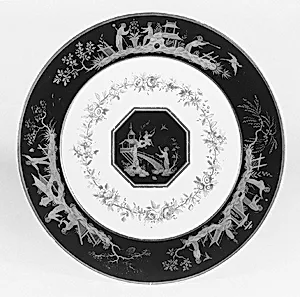
Medium
Hard-paste porcelain
Dimensions
Diameter: 9 5/8 in. (24.4 cm)
Classification
Ceramics-Porcelain
Culture
French, Sèvres
Department
European Sculpture and Decorative Arts
Museum
Metropolitan Museum of Art, New York, NY
Credit
Gift of Lewis Einstein, 1962
Accession Number
62.165.32
Rights
Public Domain
Tags
Art Historical Context
This elegant plate from the Sè Manufactory, dating to around 1791, exemplifies pinnacle of French porcelain artistry during the late 18th century. Produced the royal factory in Sèvres, Versailles, it is crafted from hard-paste porcelain—a durable, translucent material perfected by Europeans to rival prized Chinese imports. Measuring 9⅝ inches in diameter, luxurious dinnerware piece reflects the opulence of pre-Revolutionary France, when Sèvres wares graced the tables of nobility and symbolized refined taste. Adorned in the whimsical Chinoiserie style, the plate features motifs of birds and men inspired by imagined Chinese landscapes—a European fantasy that captivated Rococo and Neoclassical tastes. This decorative technique involved intricate hand-painting over glazed surfaces, fired at high temperatures to achieve vibrant, enduring colors. Chinoiserie at Sèvres blended exotic allure with French technical mastery, making such objects coveted status symbols amid social upheaval. Today, this plate resides in the Metropolitan Museum of Art's European Sculpture and Decorative Arts collection, a gift from Lewis Einstein in 1962. It invites us to ponder how art bridged cultures and eras, turning everyday dining into a canvas of elegance.
About the Artist
Sèvres Manufactory · 1740–present
The Sèvres Manufactory, one of Europe's premier porcelain producers, was established in 1740 as the Manufacture de Vincennes under the patronage of Queen Marie Leszczyńska, who sought to rival Meissen and Chantilly porcelains with French soft-paste innovations. Initially a private venture, it relocated to Sèvres in 1756 in a purpose-built facility designed by architect Laurent Lindet near Madame d...