
Saucer
late 18th century
Medium
Hard-paste porcelain
Dimensions
Diameter: 5 1/2 in. (14 cm)
Classification
Ceramics-Porcelain
Culture
German, Thuringia
Department
European Sculpture and Decorative Arts
Museum
Metropolitan Museum of Art, New York, NY
Credit
Rogers Fund, 1906
Accession Number
06.347b
Rights
Public Domain
Tags
Art Historical Context
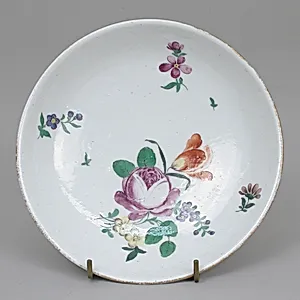
In the late 18th century, Volkstedt Porcelain Manactory in Thuringia Germany, produced this delicate saucer, a fine example of European hard-paste porcelain. Measuring just 5½ inches in diameter, it the technical mastery of the period, when German factories rivaled Chinese imports by developing durable, translucent hard-paste porcelain from kaolin clay fired at high temperatures. This made porcelain accessible for everyday luxury items like saucers, blending functionality with artistry in the European decorative arts tradition. Volkstedt, active since the 1760s, specialized in hand-painted ceramics adorned with floral motifs—evident in this piece's tagged "Flowers" decoration. These vibrant patterns reflected the era's Rococo elegance transitioning to Neoclassical restraint, symbolizing nature's abundance in domestic settings. Adorning tea services or display cabinets, such saucers highlighted Thuringia's role as a porcelain hub, fostering skilled artisans and intricate overglaze enameling techniques. Acquired through the Rogers Fund in 1906, this saucer now graces the Metropolitan Museum of Art's European Sculpture and Decorative Arts collection, inviting visitors to appreciate the refined beauty of 18th-century German craftsmanship.