
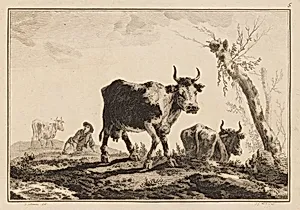
Plate 5, "Cahier de Six Feuilles de Boeufs et Vaches"
Medium
Classification
Department
Smithsonian Collection
Museum
Smithsonian American Art Museum
Credit
Gift of Eleanor and Sarah Hewitt
Accession Number
1920-36-252
Rights
Public Domain
About this artwork
Research in Progress
Art Historical Context
**Plate 5 from *Cahier de Six Feuilles de Boeufs et Vaches*** Jean-Baptiste Pillement (1728–1808), a versatile French Rococo artist, created this etching in 1771 as part of a notebook-like series of six prints depicting oxen and cows.lement, renowned for his delicate landscapes, floral motifs, and chinoiserie, traveled widely across Europe, influencing decorative arts in Poland, Portugal and England. This pastoral plate captures the gentle forms of cattle, reflecting the 18th-century fascination with rural life and the natural world amid the elegance of Rococo ornamentation. As a print medium, Plate 5 exemplifies Pillement's skill in reproductive techniques, allowing his intricate drawings to reach a broader audience through etching. These animal studies were prized for their lively, expressive lines and shaded textures, blending artistic finesse with practical utility for designers and collectors. Donated to the Smithsonian American Art Museum by Eleanor and Sarah Hewitt, it highlights the era's blend of whimsy and realism in printmaking. Though research continues, this work underscores Pillement's enduring legacy in bridging fine art and decoration, inviting viewers to appreciate the serene beauty of everyday beasts in a refined 18th-century gaze. (198 words)