
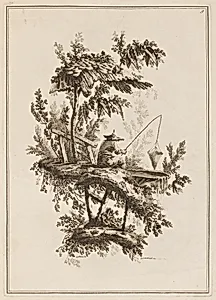
Plate 9, "Suite de douze Pêcheurs et Chasseurs"
Classification
Department
Smithsonian Collection
Museum
Smithsonian American Art Museum
Credit
Gift of Eleanor and Sarah Hewitt
Accession Number
1920-36-200
Rights
Public Domain
About this artwork
Research in Progress
Art Historical Context
Jean-Baptiste Pillement (172–1808), a French artist of the Rococo era, *Plate 9* from his *Suite de douze Pêcheurs et Chasseurs in 1771. This belongs to a series of twelve depicting fishermen and hunters in idyllic pastoral scenes, reflecting the 18th-century fascination with rural life and leisure pursuits. Pillement, renowned for his delicate landscapes, chinoiserie, and decorative motifs, drew inspiration from nature's harmony, blending elegant lines with a sense of movement that evokes the Rococo's playful spirit just as tastes shifted toward Neoclassicism. As a print, this work exemplifies Pillement's skill in reproductive techniques, likely etching or engraving, which allowed widespread dissemination of his designs to collectors and artisans across Europe. These suites were prized for their utility in interior decoration, textile patterns, and porcelain wares, bridging fine art and applied design. Though the exact medium awaits further research, its inclusion in the Smithsonian American Art Museum's collection—gifted by Eleanor and Sarah Hewitt—highlights its enduring appeal in American decorative arts circles. Visitors will appreciate how Pillement captures the transient beauty of everyday pursuits, inviting us to linger on the banks of imagined rivers or wooded hunts, a timeless nod to humanity's bond with the natural world.